
Best Types of Massage Therapy: How to Choose the Right One for Relaxation and Pain Relief
Violeta Puebla
31 August 2025 · 9 min read

If you have ever tried to book a massage and stalled at the first hurdle — which one? — you are not alone. Swedish, deep tissue, head, facial, reflexology: the names give little away, and the wrong choice can leave you wishing you had picked something gentler, or firmer, or simply different. Knowing the best types of massage therapy for your particular reason for coming in makes the whole thing far easier.
This is a decision guide. Rather than listing every treatment under the sun, it walks through the types of massage therapy offered here at A Touch of Wellness in Portishead, what each one actually feels like, and which tends to suit relaxation versus everyday muscular tension. If you want the deeper background on how massage works and its wider benefits, the ultimate guide to massage therapy benefits and techniques covers that ground in full. Here, the aim is narrower and more useful: helping you choose.
Start with your reason for booking
Before comparing techniques, it helps to name what you are hoping for. Most people arrive with one of a few goals: to switch off and unwind, to ease a specific area of tightness, to quiet a busy head, or to have some calm time that is genuinely for them. The best massage for you follows from that.
A useful rule of thumb: lighter, flowing work tends to suit relaxation and stress, whilst slower, firmer, more focused work tends to suit stubborn muscular tension. Neither is "better" — they simply do different jobs. Below, each type is grouped by what it is best known for, so you can match a treatment to your reason for coming in.
Massage for relaxation and unwinding
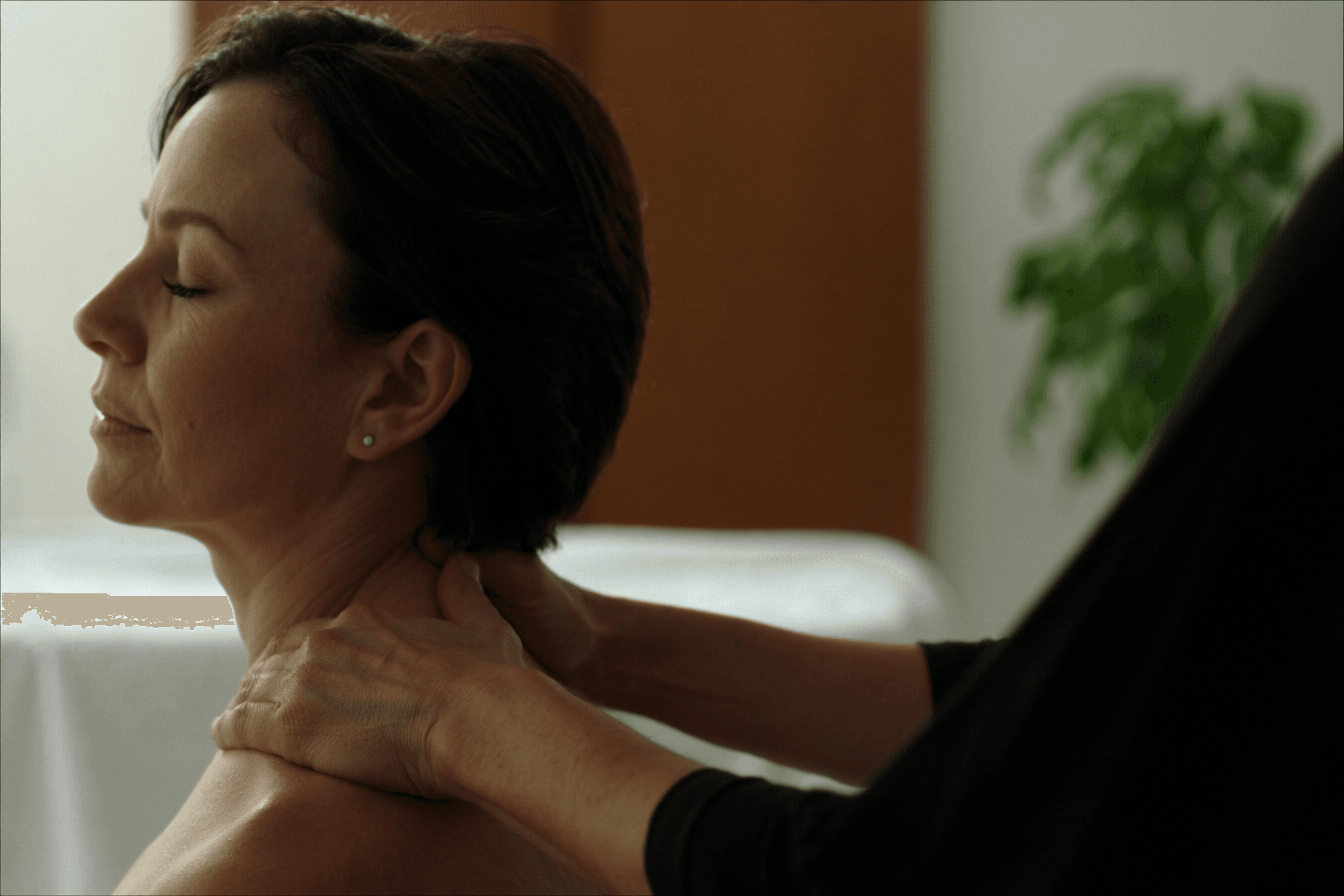
Head and shoulder work targets the tension many of us carry in the upper body.
Swedish massage — the classic all-rounder
If you are not sure where to start, a Swedish massage is usually the right first choice. It uses long, flowing strokes, gentle kneading and rhythmic circular movements across the larger muscle groups — the back, shoulders, legs and arms. The pressure is comfortable rather than intense, and the pace is unhurried.
Swedish massage is the treatment most people picture when they think of a spa-style massage, and for good reason. It is broadly relaxing rather than targeted at one problem area, which makes it ideal when your main aim is to slow down, ease general tightness and give your nervous system a chance to settle. Many people find it supports better relaxation and a calmer end to a stressful week. It is also the gentlest introduction if you have never had a professional massage before.
Head massage — for a busy, tired mind
A head massage works through the scalp, neck and shoulders using kneading and light pressure-point techniques. It is a smaller, more contained treatment than a full-body massage, but it targets an area where a great deal of tension quietly collects — especially if you spend long hours at a screen, clench your jaw, or carry stress in your neck and shoulders.
People often choose head massage when they want deep relaxation without undressing for a full-body treatment, or when their tension sits specifically in the upper body. It can be a lovely way to unwind, ease the tight, gripped feeling around the scalp and shoulders, and create a bit of quiet in a noisy week.
Facial massage — relaxation with a glow
Facial massage uses gentle, precise movements across the face, jaw and neck. Beyond feeling wonderfully soothing, it may help ease the tension many of us hold in the jaw and around the eyes, and encourages a fresh, cared-for feeling in the skin. It suits anyone who wants a calming, restorative treatment that also feels like a small act of self-care. If you tend to frown at your screen or clench through the day, this is a gentle place to release some of that.
Massage for muscular tension and tight areas
Deep tissue pressure — for stubborn tightness
Deep tissue is less a separate treatment here and more a question of pressure and focus within massage therapy. It uses slower, firmer strokes to work through the deeper layers of muscle, concentrating on a particular tight area rather than the whole body. If your shoulders feel permanently knotted, or one part of your back never quite lets go, firmer, more focused work is often what you are after.
It is worth setting expectations: deeper work can feel intense whilst it is happening, though it should never be painful in a way you want to stop. Good communication makes all the difference — pressure is always adjusted to you. If you are pregnant or managing a medical condition, it is sensible to speak to your GP before booking firmer work, and to mention it when you arrive so the treatment can be adapted.
Trigger point therapy — for specific knots and referred tension
Trigger point therapy is the most targeted option of all. A trigger point is a tight, sensitive spot within a muscle — the "knot" you can sometimes feel under your fingers — that can create tension both where it sits and in surrounding areas. The technique applies sustained, direct pressure to these spots to help them release.
This is the treatment to consider when your discomfort is specific and persistent rather than general: a recurring tight band across the shoulders, or a spot that keeps flaring up. It may help ease that focused muscular tension and improve how freely the area moves. If you want to understand the approach in more detail before booking, there is a full guide to trigger point therapy that explains how it works and who tends to benefit.
Reflexology — a different approach altogether
Reflexology sits slightly apart from the treatments above. Rather than working the muscles directly, it applies pressure to specific points on the feet that are traditionally linked to different parts of the body. You stay fully clothed apart from your feet, and most people find it deeply relaxing — a chance to sit back whilst someone else does the work.
It is a good choice if the idea of a full-body massage does not appeal, if you love having your feet worked on, or if you simply want a calming, grounding treatment that helps you switch off. Many people find it supports relaxation and a sense of general wellbeing. If you are curious about what it involves, the guide to the health benefits of foot reflexology goes further.
A note on what you may see elsewhere: styles such as hot stone, aromatherapy and Thai massage come up a lot in general guides to massage. They are worth knowing about, but they are not treatments offered here — A Touch of Wellness focuses on the types described above, done well, rather than a long menu.
What to expect at A Touch of Wellness
A Touch of Wellness is a small, independent clinic on the High Street in Portishead, near Bristol. Treatments are one to one with Violeta Puebla, the founder and clinician, in a calm, private room — never a busy, impersonal spa floor.
Every treatment starts with a short conversation. That is your moment to say what you are hoping for, where you carry tension, whether you prefer lighter or firmer pressure, and anything relevant about your health or, if it applies, pregnancy. From there the treatment is tailored to you, and you can ask for the pressure to be adjusted at any point. There is no pressure to book a package or add anything on — just the treatment you came for. You can see current treatments and durations on the pricing page, and if a massage is a gift for someone else, gift vouchers are available too.
Frequently asked questions
Which type of massage is best for relaxation?
For pure relaxation, a Swedish massage is usually the best starting point. Its long, flowing strokes and gentle pace are designed to help you unwind rather than to work intensively on one area. Head massage, facial massage and reflexology are also lovely, calming choices if you want something more contained or fully clothed.
Which massage is best for pain or muscular tension?
For specific, stubborn tightness, firmer and more focused work tends to suit best — either deep tissue pressure within a massage, or trigger point therapy for a particular knot. These concentrate on the tight area rather than the whole body and may help ease that focused muscular tension. If you have a medical condition, speak to your GP first, and always mention it at your appointment.
What is the difference between Swedish and deep tissue massage?
Swedish massage uses lighter, flowing strokes across the whole body and is aimed at general relaxation. Deep tissue uses slower, firmer pressure on the deeper muscle layers, focused on a specific tight area. Swedish is the gentler, more all-over experience; deep tissue is firmer and more targeted. Many people start with Swedish and only move to firmer work if they have a particular problem area.
Which massage should I choose for my first time?
If it is your first massage, Swedish is the easiest and most comfortable place to begin. It is gentle, all-over and gives you a clear feel for what massage is like without being intense. You can always ask for slightly firmer pressure on the day, and build up from there in future treatments.
How often should you get a massage?
It depends entirely on your reason for coming in. Some people book a massage as an occasional treat, whilst others come regularly — say monthly — to keep on top of tension that builds up between visits. There is no single right answer; a good approach is to see how you feel after your first treatment and go from there. Violeta is always happy to suggest what might suit you.
Ready to choose?
The best type of massage is simply the one that matches your reason for booking — gentler work to unwind, firmer work to ease a tight spot. If you are still unsure, start with a Swedish massage or mention what you are hoping for and let the treatment be tailored around it. When you are ready, you can book a treatment online in a couple of minutes, or get in touch if you would like a steer before you do.
Get the latest news straight to your inbox
Subscribe to our newsletter to get the latest news and offers.