
What to Expect at Your First Reiki Session
Violeta Puebla
1 July 2026 · 9 min read
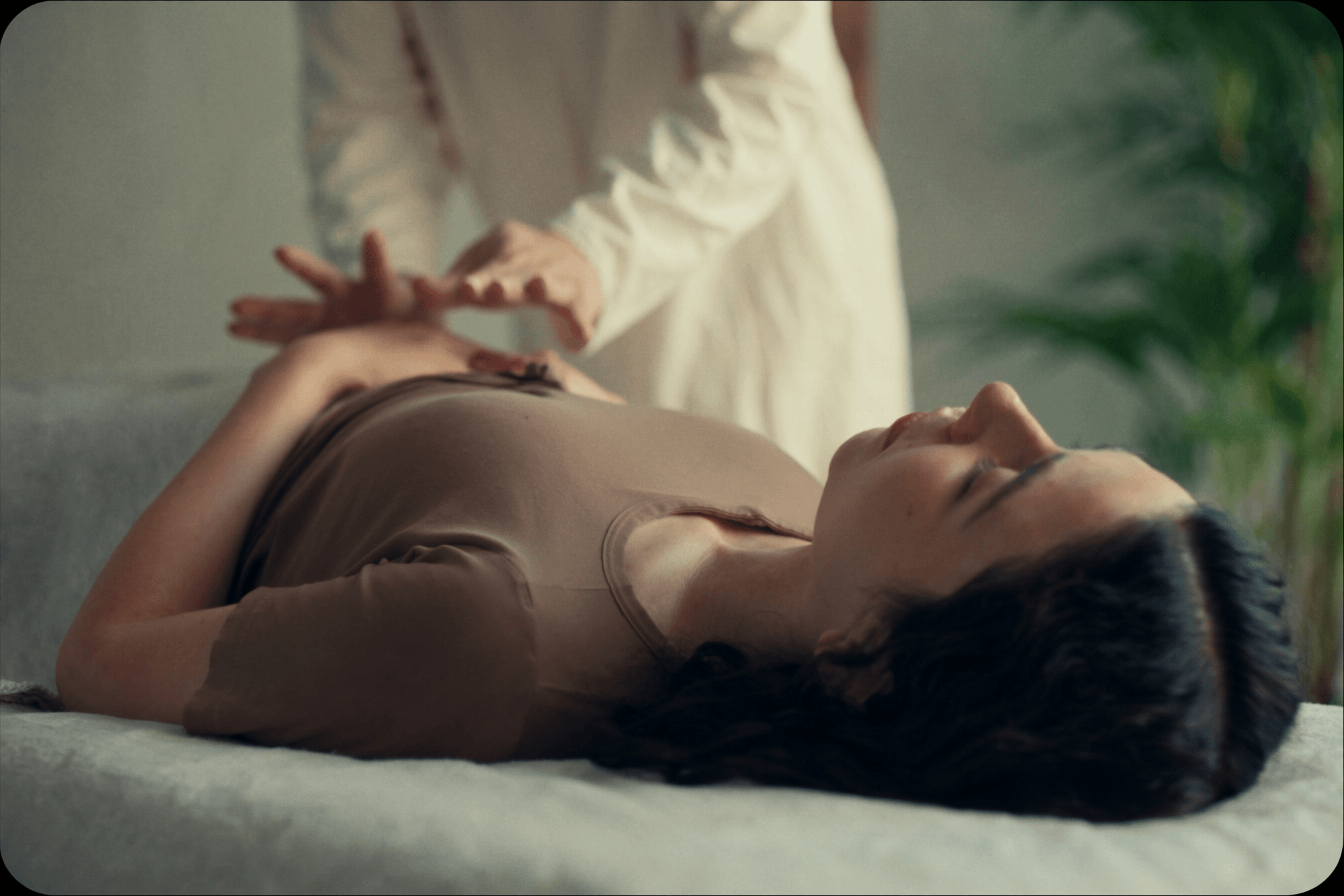
If you have booked a first appointment, or you are still weighing it up, it is completely natural to wonder what to expect at a reiki session before you go. Reiki is one of the gentlest treatments you can try, yet because you cannot see it working the way you can feel a massage, the unknown can make it feel more mysterious than it really is.
The reality is calm and undramatic. You stay fully clothed, lie back on a comfortable treatment couch, and rest while a practitioner holds their hands lightly on or just above your body. There is nothing to do, nothing to get right, and nothing done to you that you have not agreed to. Most people describe it as one of the most deeply relaxing hours they have spent in a long time.
This guide walks through exactly what happens in a first reiki session, how it tends to feel, and how to prepare so you can settle in and get the most from it. If you would first like the background on what reiki is and where it comes from, our guide to reiki and energy healing covers that in full; here, the focus is the experience itself.
Reiki in brief: a gentle, complementary therapy
Reiki is a light-touch relaxation therapy that originated in Japan. During a session, the practitioner rests their hands lightly on or slightly above a series of positions along your body, and you simply lie still and relax. It is calm, quiet and completely non-invasive.
It helps to be clear from the outset about what reiki is and is not. Reiki is a complementary practice, valued for relaxation and a sense of calm, rather than a medical treatment. It is not a substitute for care from your doctor, and it does not diagnose, treat or cure any condition. Many people find it deeply soothing and use it as a way to switch off, ease everyday stress and give themselves an hour of genuine rest. Within those honest limits, it can be a lovely thing to receive.
If you have a diagnosed health condition, are pregnant, or are receiving medical treatment, reiki can usually sit comfortably alongside that care, but it is always sensible to mention it to your GP as well. Reiki works with your medical care, never instead of it.
Before the session: booking and preparation
Your first appointment really begins before you arrive, because a little gentle preparation helps you settle more easily once you are on the couch.
When you book, there is very little you need to do in advance. It helps to drink some water and to avoid a heavy meal right beforehand, so you feel comfortable lying down. If you can, allow a few unhurried minutes either side of the appointment rather than rushing straight from one thing to the next; arriving flustered makes it harder to unwind, whereas a calm approach lets the session do its work.
There is no need to prepare mentally or to arrive with the right mindset. You do not have to believe anything in particular for reiki to feel relaxing, and you cannot fail at it. Coming with an open, curious frame of mind is more than enough. If you have a specific intention, such as wanting to feel less wound up or to sleep more easily, you are welcome to mention it, but it is not required.
What happens in a reiki session, step by step
Every practitioner has their own rhythm, but a first session generally moves through the same broad stages.
The conversation
You will start by talking. This first part is an unhurried chat about how you are feeling, anything relevant in your health, and what you are hoping to get from the session. As an experienced, professional practitioner, Violeta uses this time to explain how reiki works and what will happen, so nothing comes as a surprise. It is also your moment to ask anything at all. No question is too small.
This is also when you can raise any preferences, such as areas you would rather were not touched, or whether you would prefer hands held just above the body rather than resting on it. Reiki adapts easily to what feels comfortable for you.
Settling onto the couch
When you are ready, you lie down on a padded treatment couch, fully clothed, usually with a light blanket over you and a cushion under your head or knees. The room is kept warm and quiet, often with soft music and low lighting. You close your eyes if you would like to, and take a few slower breaths to let your body settle.
Nothing more is asked of you than to rest. This alone, an hour of lying still in a calm space with no phone and nowhere to be, is part of why people find reiki so restorative.
The treatment itself
Once you are comfortable, the practitioner moves gently through a sequence of hand positions, resting their hands lightly on or just above your body, often starting near the head and working down towards the feet. Each position is held for a little while before moving on. The touch, where used, is still and feather-light. There is no massage, no pressing and no manipulation.
Your only job is to relax and notice how you feel. Many people drift into a dreamy, half-asleep state; some fall asleep altogether, which is perfectly fine. If at any point you felt uncomfortable, you could say so or move, and the session would adjust around you.
Coming back
At the end, the practitioner lets you know the session is finishing and gives you a few moments to come back to the room in your own time. There is no rush to sit up. Afterwards there is usually a short, gentle chat about how it felt, a glass of water, and any simple suggestions to carry the calm home with you.
What reiki actually feels like
Because there is so little to see, the physical sensations often surprise first-timers, and they vary a great deal from person to person.
Commonly reported sensations include a pleasant warmth spreading from the practitioner's hands, a heaviness or floating lightness in the limbs, gentle tingling, and a deep, settling calm. Some people see soft colours behind closed eyes, or feel a wave of relaxation move through the body. Others feel very little in particular beyond simply being profoundly relaxed, and that is just as valid an experience.
There is no "right" way for reiki to feel. You will not be knocked out or left disoriented, and you stay aware of where you are throughout. What almost everyone shares afterwards is a sense of having genuinely switched off, the kind of unhurried rest that is hard to reach in an ordinary day. If you have ever felt that heavy, contented calm at the very end of a good massage, you already know the territory.
How it works at A Touch of Wellness
At A Touch of Wellness on the High Street in Portishead, reiki is offered as an unhurried, one-to-one session in a calm, private treatment room, the same warm space used for hands-on treatments such as reflexology and trigger point therapy. You are never one of a crowd, and the whole hour is shaped around you.
As a small, solo clinic, everything is personal here. You see the same practitioner each time, in a setting built for rest rather than a busy salon. Reiki sits naturally alongside the other treatments on offer, and some people like to pair it with a massage or reflexology for an even deeper reset.
If you would like to understand the options before booking, you can look over the pricing, read what other clients have said on the reviews page, or learn more about the practice and how Violeta works. When something is not clear, you are always welcome to get in touch first.
Frequently asked questions
What happens in a reiki session?
You talk briefly with the practitioner about how you are feeling, then lie down fully clothed on a comfortable treatment couch under a light blanket. The practitioner rests their hands lightly on or just above a series of positions along your body, holding each for a while, while you relax with your eyes closed. It is calm, quiet and completely non-invasive, and it usually ends with a few moments to come round and a short chat.
What does reiki feel like?
It varies from person to person, but commonly reported sensations include gentle warmth from the practitioner's hands, a heavy or floating feeling in the limbs, light tingling, and a deep sense of calm. Some people drift into a dreamy, half-asleep state, while others simply feel very relaxed. There is no right way for it to feel, and feeling little beyond calm is completely normal.
What should I wear for a reiki session?
You stay fully clothed throughout, so wear something comfortable and loose that you can relax in easily while lying down. Soft, warm layers are ideal, since you will be still for a while and may cool slightly as you relax. It is worth being able to slip off your shoes and remove anything bulky, like a thick belt, so you can lie comfortably.
How long does a reiki session last?
A session typically runs for around an hour, which includes time to talk at the start and to come round gently at the end, though exact lengths can vary. You can see the current options on the pricing page. Allowing a few unhurried minutes either side means you are not rushing in or straight out.
How will I feel after reiki?
Most people feel deeply relaxed, calm and a little dreamy afterwards, rather as you might feel after a very good nap. Some notice they sleep better that night or feel lighter and clearer over the following days. It is a good idea to drink some water, take things gently for a little while, and let yourself ease back into the day.
Is reiki safe?
For most people, reiki is widely considered a safe, gentle and non-invasive practice, since it involves nothing more than light touch, rest and relaxation. It is complementary rather than medical, so it is not a substitute for care from your doctor. If you are pregnant, have a health condition, or are having medical treatment, reiki can usually sit alongside that, but it is sensible to mention it to your GP as well.
Ready to begin?
If you have been curious about reiki but unsure what you were walking into, the honest answer is that it is calmer and simpler than you might imagine: a gentle conversation, an hour of rest on a comfortable couch, and light, still touch while you relax. You stay clothed, aware and at ease from start to finish.
When you feel ready, you can book a reiki session online in just a couple of minutes and come and unwind in the clinic in Portishead.
Get the latest news straight to your inbox
Subscribe to our newsletter to get the latest news and offers.